Every business in your category is running ads, posting offers and answering questions on Instagram. The people who respond (asking for a price, checking delivery, tagging a friend) are customers in the market right now. Some of them will never hear back. Others are open to a better offer.
Instagram’s own ad tools let you target interests, not the people engaging with one specific business. This guide shows how to find those people yourself, keep the ones who fit, and start a conversation that doesn’t feel like an ambush.
Step 1: Pick the businesses to watch
The best accounts to watch are rarely the biggest brand in your category. Look for businesses whose customers look like yours:
- Direct competitors that sell what you sell, to the same kind of customer.
- Adjacent businesses your customers also buy from. A yoga studio’s customers also follow activewear shops and smoothie bars.
- Local leaders if you sell in one place: the business everyone in your area follows for your topic.
- Creators and educators in your niche, whose audience comes to learn and asks a lot of questions.
Two quick checks: the account is public, and its comments come from customers rather than other brands.
Step 2: Look for buying signals in the comments
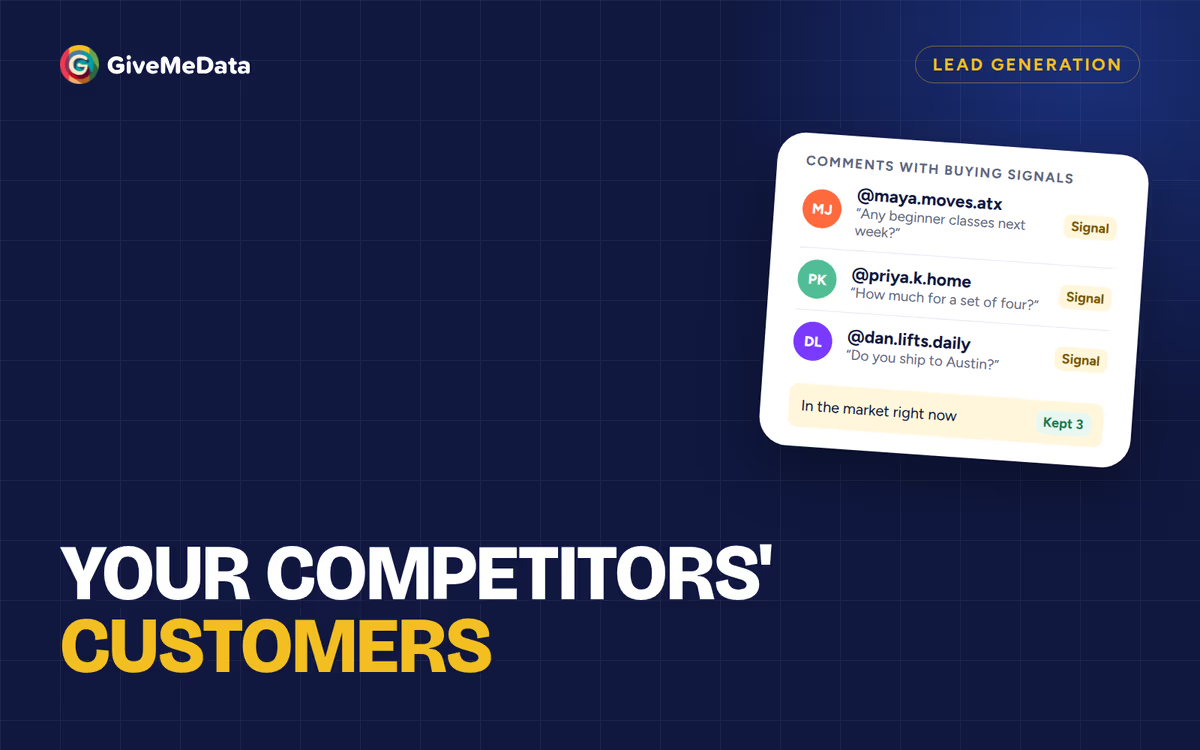
Comments are where intent shows. On a competitor’s recent posts, look for:
- Questions about price, availability or delivery: “how much?”, “do you ship to Canada?”, “any openings next week?”
- Comparisons and hesitation: “is this better than…?”, “does it work for beginners?”
- Tags: someone tagging a friend under an offer is often planning to buy with them.
- Complaints that went unanswered: an open door for a business that responds.
Engagement Analysis lists who commented on a post, or on an account’s recent posts, together with what they wrote: 15 credits per commenter. Sort the list by what people wrote, keep the ones showing a signal, and you have a short, warm list.
Step 3: Widen the list when the business is small and local
For a small, local competitor, almost everyone who engages is a potential customer of yours too. There it can make sense to go wider: the people who liked its recent posts (1 credit each) or the public accounts that follow it (Audience Export, 1 credit each).
For a big brand, stay with the comments. Its wider audience is broad and mostly passive.
Step 4: Keep the people who fit
Whichever list you built, check it before you reach out. Start with what you have:
- Remove private accounts and other brands you recognize.
- Keep the people whose comment fits what you sell.
Then add profile details to the ones you kept with Bulk Profile Enrichment (25 credits per profile, refunded if the profile isn’t found): bio, category, account type, follower count, city, website, and any public email or phone. Filter by:
- Account type and category, if you sell to businesses.
- City or bio keywords, if your offer is local or niche.
- Contact details, if you plan to email or call.
Step 5: Start a conversation, not a pitch
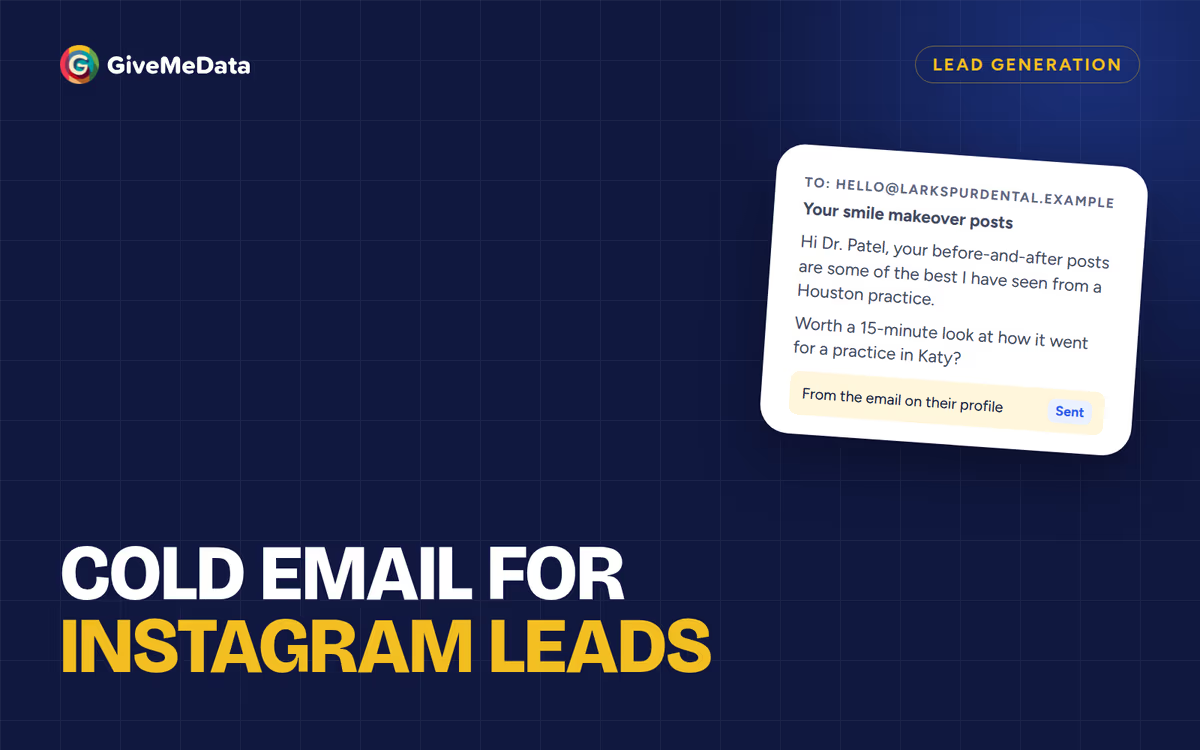
Never mention the competitor. It reads as if you were watching them, and it makes the message about the competitor instead of the person. Write about what they asked or what they care about, say in one line what you do, and ask a small question.
Hi Maya, saw you were looking for reformer classes for beginners. We run a 4-week intro series in Austin, small groups. Want me to send you the schedule?
Hi Daniel, noticed you asked about custom labels for small batches. We make them, usually in a week. Happy to send a few samples if it’s useful.
More on writing messages people answer: Instagram cold DM outreach and find Instagram business emails for cold email.
Step 6: Make it a monthly habit
New questions appear every week. Once a month, list the commenters on each competitor’s newest posts and start with the people who weren’t on last month’s sheet. In a spreadsheet, =COUNTIF(LastMonth!A:A, A2)=0 in a new column marks them.
A worked example
A pilates studio watches three studios in its city. Their last 20 posts have about 600 comments between them: 9,000 credits for the commenter lists. About 150 comments ask about prices, schedules or beginner classes. Adding profile details to those 150 people costs 3,750 credits. The whole month is under 13,000 credits, well within the Starter plan’s 150,000 ($19 a month, see pricing).
When you’d rather describe your customer
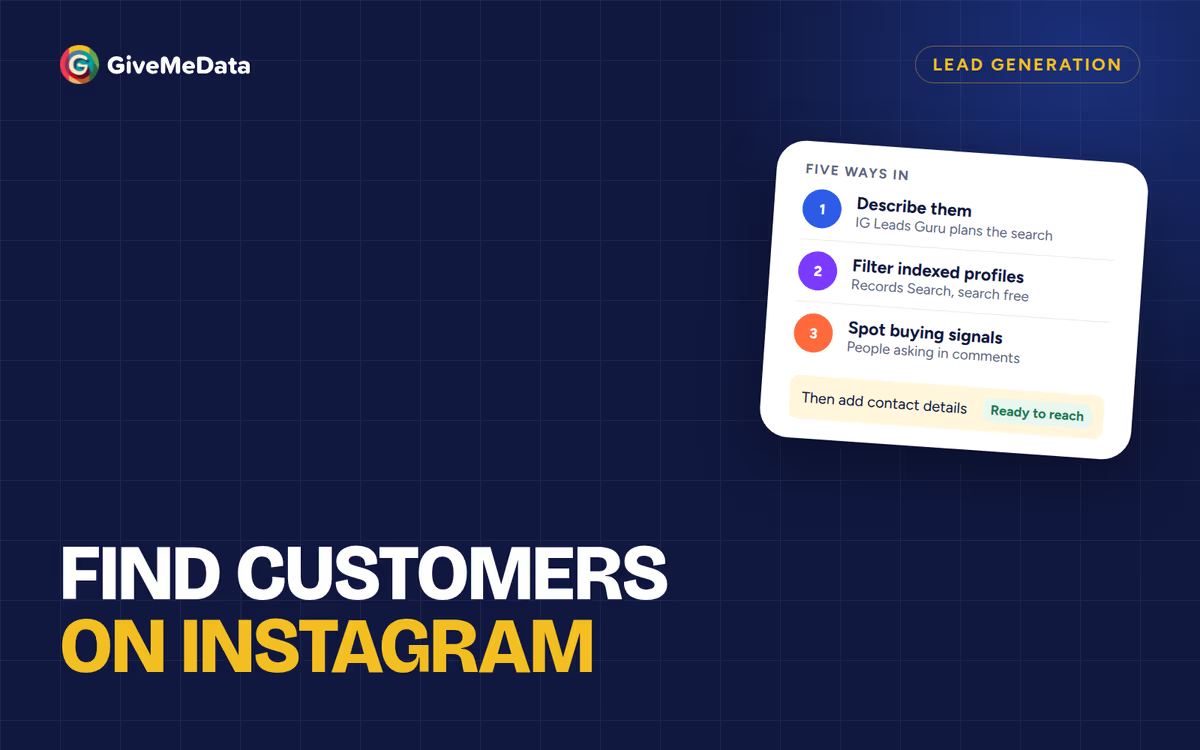
Sometimes the customer is easier to describe than the business they buy from: “Pilates studios in Denver” or “real estate agents in Miami with emails”. Describe it to IG Leads Guru and it plans the search, with the price shown before anything runs. All the ways to build a list are in how to find customers on Instagram.
Questions
How many competitors should I watch?
Three to five businesses whose customers are close to yours. One focused account beats ten broad ones.
Comments or followers: which is better?
Comments show people who are active and interested right now; followers include years of people who no longer pay attention. Start with comments, and widen to a small local business’s wider audience only when it is close to your customer.
Should I mention the competitor in my message?
No. Mention something from the person’s own comment or profile.
Do I need to connect my Instagram account?
No. GiveMeData runs in the web app. You don’t connect your Instagram account or install a browser extension.